Wednesday, January 1, 2014

Anderson Blasts WI Bowlers and sets new fastest ODI Century record


New Zealand all-rounder Corey Anderson scored the quickest century ever in international cricket on Wednesday, taking just 36 balls against West Indies to break the record long held by Pakistan's Shahid Afridi.
Afridi scored a 37-ball hundred against Sri Lanka in 1996 and had remained the fastest across all formats of the international game since. Anderson, 23, brought up the mark with his 12th six of the innings after the third one-day international between the two sides was reduced to a 21-over match due to rain.
Anderson remained unbeaten on 131 off 47 balls with 14 sixes and half a dozen fours to take New Zealand to a mammoth 283 for four wickets in their innings.

Tuesday, December 31, 2013

Happy New Year 2014


Thanks for giving us the opportunity to serve you we look forward to meeting you again. we greatly value your business and Happy New Year.


w3softpro.com

Sunday, December 29, 2013

5 Most Amazing Spaceflight Feats of 2013

The year 2013 marked an incredible one for spaceflight, with space agencies around the world making giant leaps in their own exploration of the solar system, while NASA welcomed the addition of a new commercial cargo ship to its list of supplies for the International Space Station.
Also this year, Virgin Galactic and other private spaceflight companies made strides in their work to make space tourist flights a reality, while one Canadian astronaut became a social media mega-star by showing what life is truly like in space.
Here's a look at five of the most amazing spaceflight feats of 2013:

1) China rover lands on the moon


When China's Chang'3 spacecraft landed on the moon on Dec. 14, it marked the first soft lunar landing in 37 years and the country's first-ever successful touchdown on an extraterrestrial surface. Chang'e 3 also delivered the rover Yutu ("Jade Rabbit") to the lunar surface for a three-month exploration mission.
China is the third country to achieve a soft landing on the moon after Russian and the United States, Chang'e 3 beamed live views of its landing on the moon's Sinus Iridium (Bay of Rainbows), as well as the Chinese flag on Yutu — a symbol of how far China's space program has come in a short while. Chang'e 3 is China's third moon mission, following two orbiter flights, and is expected to spend a year studying the lunar surface. It is named after the legendary Chinese moon goddess Chang'e, with Yutu named after her mythical pet rabbit. 
 In another milestone for China, three astronauts aboard Shenzhou 10 docked with a small space station prototype Tiangong 1 in June, paving the way for the country to achieve its goal of making a larger space station in the future, analysts say.

2) Private rockets and spaceships blast off


Both dragons and swans visited the International Space Station in 2013, courtesy of two private companies that have multimillion-dollar agreements with NASA to send cargo to the orbiting complex.
The Dulles, Va.-based Orbital Sciences Corp. made its first demonstration flight in September with its Cygnus spacecraft and Antares rocket, marking a major leap forward for commercial spaceflight. Orbital Sciences has a $1.9 billion contract for eight cargo delivery mission to the space station for NASA using its Antares rockets and Cygnus spacecraft.
The Antares booster launched its first test flight from NASA's Wallops Flight Facility on Wallops Island, Va., in April, setting the stage for the September Cygnus debut. Orbital is now slated to launch its first official cargo mission to the station on no earlier than Jan. 7 after a a delay due to an unrelated space station cooling system malfunction.
Meanwhile, the Hawthorne, Calif.-based Space Exploration Technologies Corp. — known better as SpaceX — launched its
                                          The first Cygnus commercial cargo spacecraft built by Orbital
                                                    Sciences Corp. is seen here attached to the International Space
                                                  Station's Harmony node, after arriving at the station on Sept. 29, 2013.

own unmanned Dragon space capsule on a cargo mission to the space station March this year. It was the second of 12 cargo missions to the station for NASA under a $1.6 billion deal.
SpaceX also test flew a new version of its workhorse Falcon 9 rocket, made its first west coast launch from California's Vandenberg Air Force Base, and made advances in reusable rocket technology using its Grasshopper prototype. The company's manned version of the Dragon spacecraft also passed key design reviews in 2013. SpaceX's next launch of a Falcon 9 is set for Jan. 3 from the Cape Canaveral Air Force Station in Florida carrying the Thaicom 6 communications satellite.

3) India and NASA double-team Mars


India's space program went interplanetary in 2013, when the country launched its first mission to Mars. The $73.5 million Mars Orbiter Mission (MOM) thundered into space successfully in November on its 300-day journey. Engineers initially struggled with an engine problem in the days following the launch, but MOM is now winging its way over on a mission to search for elusive methane on Mars, and to test long-distance communications and space technology.
Meanwhile, NASA's newest robotic mission to Mars looked like it would be pushed back by the government shutdown, but the agency received a special exemption to launch MAVEN on time in mid-November. The $650 million MAVEN mission to Mars — the name is short for Mars Atmosphere and Volatile Evolution — will be a communications relay for the Curiosity and Opportunity rovers on the surface while also probing the origins of Mars' atmosphere from orbit.

4) Virgin Galactic SpaceShipTwo makes powered test flights


Space tourism took a huge leap closer to reality in 2013, when Virgin Galactic made two powered test flights of SpaceShipTwo. Launching from California's Mojave Air and Space Port, the private company's spacecraft zoomed faster than the speed of sound, high above the desert.
On the second flight, pilots also tested the feathered re-entry system that will bring SpaceShipTwo safely back to Earth after a trip into suborbital space. Britist billionaire Sir Richard Branson, who owns the company, plans to be on the first spaceflight with his family before commercial flights begin in 2014.
Virgin Galactic's SpaceShipTwo is a reusable spacecraft designed to launch paying customers on short flights into space and return them to Earth. The spacecraft is launched from the air by its huge carrier aircraft WhiteKnightTwo and can reach suborbital space, but is not built to launch into orbit. It can carry eight people — two pilots and six passengers — with tickets on sale for $250,000 a seat. [See photos of SpaceShipTwo's 2nd rocket-powered test flight]
SpaceShipTwo and WhiteKnightTwo are an evolution of the SpaceShipOne and WhiteKnight vehicles built by aerospace veteran Burt Rutan and his Mojave, Calif.-based firm Scaled Composites to win the $10 million X Prize for reusable private spaceflight.

5) Astronaut Chris Hadfield brings space down to Earth

Chris Hadfield became a space star, as he found time to hobnob with Star Trek stars and create a David Bowie music video tribute in between running an extremely productive science mission on Expedition 35 aboard the International Space Station. The Canadian astronaut commanded the expedition while posting daily tweets, videos and pictures about life in space, charming people all over the world.
Shortly after landing in May, Hadfield announced his retirement from the astronaut corps — but instead of relaxing, he stepped on the accelerator. He released a book and is now on a multicountry tour that, again, is attracting crowds and celebrities (most recently, in London, physicist Stephen Hawking). Then, in fall 2014, Hadfield will start teaching at the University of Waterloo in Ontario, Canada.

w3softpro.com

Sunday, December 22, 2013

Made in China: Top 5 Fake, Gross Chinese Products

Decades ago, the Chinese were known for selling counterfeit bags that had Louis Vuitton labels. It was later followed by other counterfeit items such as mobile phones displaying the Apple logo and were sold not only in China but in other parts of Asia.
The counterfeiting did not stop there though as news about food safety and fake food hit newsstands in recent years. The following are a few of the most controversial faked food made in China.
1. Gutter Oil
Gutter oil is recycled cooking oil taken from Chinese sewers. The video expose ofRadio Free Asia has gone viral on various social media sites as RFA shows how China's black market recycles cooking oil from Chinese gutters. The recycled gutter oil is later repacked and sold.
2. Rat Meat Sold as Mutton or Beef
The Chinese Ministry of Public Security said in May 2013 that authorities caught traders in the country who sold rat, mink, and fox flesh as mutton or beef. A total of 63 people were arrested according to the NY Times.
A Sina-Weibo user, China's version of Twitter asked, "Is it cheaper to raise rats than sheep?"
3. Fake Chicken Eggs
Fake chicken eggs being sold in China look like real chicken eggs but they're composed of coagulants, starch, and resin while the shell is made up of gypsum powder, calcium carbonate and wax. While the news of these fake chicken eggs is slowly making their way to mainstream media, they have been around since the 1990s, according to Geobeat. Reports say these fake eggs cost much less to produce as compared to the real thing.
4. Melamine Milk
In 2009, packs of infant formula imported from China were removed from Philippine grocery stores because they were tainted with Melamine.
The tainted milk powder was also sold in China resulting to 53,000 Chinese children being brought to various hospitals for food poisoning.
5. Rice Noodles
Rice noodles made from mouldy grain and carcinogenic additives started making the rounds in Chinese grocery stores in 2010. According to the Beijing Youth Daily, 50 factories were making them producing 500,000 kg of rotten grain noodles a day.
Experts say that these rice noodles may have made it to other countries.

Thursday, December 19, 2013

Isro makes its debut on Facebook, Twitter


Exactly 72 hours after Isro announced that it was initiating legal action against organizations which have created Facebook pages and Twitter accounts using the name of the space agency, department of space and Mangalyaan, the agency launched its own official social media pages on Thursday.

Isro has, for the first time in its 45-year-old history, started its own official Facebook page and Twitter account, which can be accessed at www.facebook.com/isroofficial and www.twitter.com/isroofficial. In the first eight hours following its launch, the new official Facebook page saw 5,233 hits.

According to Isro, the aim of these new pages is to maximize public outreach, provide mission updates and create public awareness about mission objectives and accomplishments of key programmes.One of the major announcements made on the accounts immediately after their launch was that the Geo Synchronous Satellite Launch Vehicle (GSLV) will be launched at Sriharikota at 4.18pm on January 5, 2014.

It was apparent that Isro finally felt the need to have its own official social media pages following the appearance of the fake ones. "It is ironic that something fake has encouraged Isro to go in, at last, for official social media pages and get the public involved in the missions," said a former Isro official.

Its first experiment in entering the social media arena was with the Mars Orbiter Mission(facebook.com/isromom) on October 22, 2013. According to Isro it has proved immensely popular scoring nearly three lakhs hits in just two months and the number is going up steadily.

The MOM facebook states that the Indian Mars mission is among the five-most talked about topics in India on par with Narendra Modi, Sachin Tendulkar, I Phones and Raghuram Rajan.

Isro has warned that impersonation of the organisation is construed to be a seriousoffence and stern legal actions against these pages and their administratorsare being initiated from ISRO/department ofsSpace to bringthem to immediate closure.

Tuesday, December 17, 2013

Trial by fire as post-Sachin era begins

                                       Virat Kohli will attempt to fill in the big boots of Sachin Tendulkar at No. 4

The thrashing in ODIs behind them, India will be aiming to start the post-Sachin Tendulkar era in Test cricket on a positive note but the task looks daunting as they would be up against the world's number one side South Africa in the two-match series starting on Wednesday.

At the Wanderers stadium, after losing the three-ODI series 2-0, the visitors will be looking to make their first mark on the tour, in what will be a new era in the annals of Indian cricket.

For this is the first Test match for Team India following the retirement of Sachin Tendulkar. The Master Blaster bid farewell after playing his 200th Test versus West Indies in Mumbai, in what was an emotional roller-coaster for the entire nation's cricket fans.

Since then, six ODIs have been played against the Windies and here in South Africa. The contrasting results in these two series had taken some focus off the issues emanating from Tendulkar's retirement. Now, they need to be addressed.

The first question to be asked is who will bat at number four? The true realisation of Tendulkar's departure will dawn when a new face comes in to bat at the fall of the second wicket during India's first innings in this Test.

It probably will be Virat Kohli, attempting to fill in the big boots, an unenviable task surely.

It fits the context of this Test series. This is India's first overseas Test in nearly two years, since their tour to Australia in 2011-12.

Kohli has been the premier batsman for this young side for almost two seasons now. And ever since he has landed here, the Proteas have given him their undivided attention. Dale Steyn and Morne Morkel peppered him with pace and bounce in the ODI series, wherein he scored 31 runs and a duck in the first two ODIs.

That India lost when he failed is, perhaps, a significant reminder of their reliance on Kohli, who has 11 hundreds in successful ODI run-chases. It isn't his success rate in limited-overs cricket that makes him a first-choice pick for number four in Tests.

Instead, it is his aggressive mentality and gusty demeanour that was amply displayed when faced with blinding pace and fearsome bounce in the first ODI at the Wanderers.

Riled by a Morkel delivery that hit him in the ribs, Kohli didn't back away, and took on Steyn and company, or at least he tried to.

In the two Tests though, he will need to mix this belligerent intent with caution. It is true for all other batsmen as well.

It was their propensity to look for shots at the very beginning of their innings that led to their downfall in the ODIs.

And South Africa's pace attack will once again look to exploit this bit with the red Kookaburra ball expected to do more than the white one. Not to mention, it is the same Wanderers' deck that caused much pain to this young Indian batting line-up in their opening match on tour. "There is pace and bounce in this wicket, as is the case at this ground always," said Pethuel Buthelezi, a groundsman here, who has worked on the Wanderers' pitch for a long time.

"But this is also a win-toss-bat-first wicket. If the batsmen get set they will like the bounce and 400 runs should be a good first innings' score," he said.

It should be music to the Indian batsmen who are looking for that one innings to restore lost confidence. With such half-baked form of his batsmen, and in light of Tendulkar's exit, will skipper Mahendra Singh Dhoni pick seven batsmen or take a risk with five bowlers?

Seven batsmen ought to be the safe bet. In either case, three pacers should be the norm, as is in South African conditions.

But a five-bowler attack will put focus on R Ashwin. The off-spinner is now the leading all-rounder in Test cricket (as per ICC Test rankings) and his record doesn't disprove it. "Ashwin bats well in the tail-end of their young batting line-up and it is important for us to use the new ball well, get the top-order and retain our hunger getting into their tail," said Morne Morkel, ahead of the first Test.

With 104 wickets in 18 Tests, he could have been the attack leader as well, if not for the presence of Zaheer Khan. The return of the 88-Test pace-veteran adds much bite to the Indian attack.


Google Glass update lets users wink and take photos

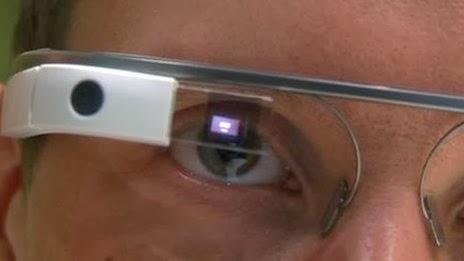
Google has introduced a new feature to its Google Glass, which allows users to take a photo with a "wink of the eye".
                       Google said the wink feature could have various potential uses in future
Google said the feature was faster than the camera button or the voice action and works even when the display is off.
The update to Google Glass, dubbed version XE12, also adds a screen lock feature and the ability to upload and share videos on YouTube.
Technology firms have been keen to capture the wearable gadgets market, seen by many as a key growth area.
Google said the wink feature in its Glass could have various other uses in the future.
"Imagine a day where you're riding in the back of a cab and you just wink at the meter to pay," the firm said in a blogpost.
"You wink at a pair of shoes in a shop window and your size is shipped to your door. You wink at a cookbook recipe and the instructions appear right in front of you - hands-free, no mess, no fuss," it added.
Potential growth
The wearable technology market is expected to see robust growth in the coming years.
However, analysts differ over the potential size of the market.
According to Juniper Research, the sector is expected to have annual sales of $19bn (£11.9bn) by 2018, up from $1.4bn this year.
Analysts at the bank Credit Suisse have been more upbeat and have suggested a figure of $50bn figure by the same date.
Research firm Gartner has been more cautious about its predictions. It has said it expects $10bn sales for 2016. But one of its analysts suggested the sector would grow more quickly if businesses decided to equip their workers with such tech.
Growing competition
Google Glass is one of a number of wearable gadgets that have been launched by firms as they compete to take a a major share of the growing market.
In October, Nike launched its second generation wristband, Fuelband, which helps users track their physical activity.
In September, Samsung unveiled a smartwatch, Galaxy Gear, that can be used for voice calls and run apps.
Also in September, Japanese mobile operator NTT Docomo, demonstrated glasses that can translate a menu by projecting an image of translated text over unfamiliar characters.
Earlier this year, US-based Heapsylon said it was developing sensor-equipped socks that would help their owners monitor their balance while walking or running.
Meanwhile, Chinese firm Shanda, has unveiled the Geak Ring - a finger-worn device that can unlock a user's smartphone or pass data to others.